Kilimanjaro Mountain Bike Trek
Tour Overview
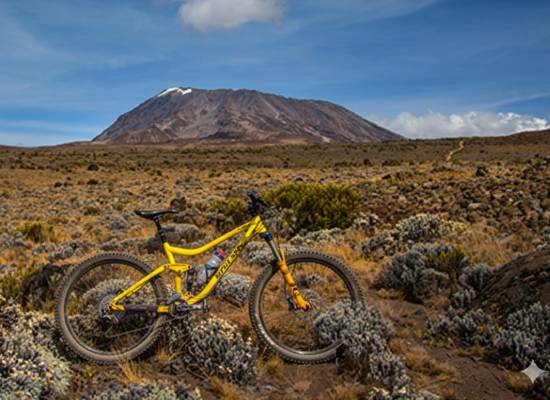
The Kilimanjaro Mountain Bike Trek is a specialized “Ride-and-Carry” expedition, uniquely designed for those who want to experience the Roof of Africa through a mix of elite cycling and high-altitude trekking. Utilizing the Kilema Route, a rugged 4×4 gravel road which is usually used for park supplies and rescue.
This is not a casual ride; it is a full-scale expedition through five distinct climate zones. You will climb through humid rainforests and alpine deserts before attempting a midnight push to Uhuru Peak.
While expert cyclists can pedal approximately 70% of the route, the extreme incline and thin air make the final push from Kibo Hut to Uhuru Peak a test of physical strength, where bikes are often pushed or carried.
Expedition Highlights
The True “Ride-and-Carry” Challenge: Test your limits in a hybrid expedition that combines technical mountain biking with high-altitude trekking and bike-portage.
The 70% Pedal Goal: Challenge yourself to stay in the saddle across the Kilema 4×4 track, navigating the diverse terrain up to the alpine desert.
Expert Porter Support: Our specialized crew handles the heavy lifting on the steepest sections, ensuring your bike reaches the summit ridge for that iconic final ride.
The Epic Gravity Reward: After the grueling “carry” to the top, enjoy the ultimate payoff, a long, challenging descent that is widely considered the most enjoyable ride in Africa.
Exclusive Kilema Access: Traverse the only path on the mountain designated for vehicles and bikes, paralleling the historic Marangu route while avoiding the heavy foot traffic.
Quick Kilimanjaro Mountain Bike Trek Facts
| Feature | Details |
| Expedition Type | Ride-and-Carry (70% Pedaling / 30% Trekking) |
| Duration | 7 Days (Total Journey) |
| Route | Kilema 4×4 Route (Authorized for Bikes) |
| Max Altitude | 5,895m (Uhuru Peak) |
| Total Distance | 114 km (Round Trip) |
| Surface Type | Gravel, Loose Volcanic Scree, Dirt Tracks |
| Physical Rating | Extreme (Requires high-altitude endurance) |
| Best Time | Jan–March & June–October (Dry Seasons) |
Technical Skills & Experience Required
While the Kilema Route is a non-technical gravel road, mountain biking at high altitude presents unique challenges that differ from your local trails. To ensure your safety and enjoyment, we recommend that riders possess the following skills:
High-Altitude Endurance You don’t need to be a professional racer, but you should have a strong aerobic base. Cycling between 3,500m and 5,000m puts immense strain on the lungs; your ability to maintain a steady, “slow and low” cadence is more important than speed.
Loose Surface Handling Much of the descent involves navigating “scree” (loose volcanic gravel) and sandy patches. You should be comfortable with your bike moving slightly beneath you and know how to use your body weight to maintain traction and balance on shifting surfaces.
Advanced Braking Control Descending 4,600 meters in a single day is a massive test for your equipment and your forearms. You must be proficient in “feathering” your brakes to prevent overheating the rotors and to avoid skidding on the steep, dusty sections of the lower moorland.
Basic Trail Maintenance While our Uisso Adventures mechanics are always on hand, riders should be comfortable with basic trailside tasks, such as clearing a jammed chain or adjusting a seat post, as the rugged terrain can be jarring for even the best components.
Cold Weather Operation On summit day, you will be riding in sub-zero temperatures with thick gloves. Experience operating shifters and brake levers with restricted finger dexterity is a significant advantage during the early morning hours.
Detailed Itinerary
Day 1: Arrival & Bike Fitting
Pick up from Kilimanjaro Airport (JRO). Transfer to Moshi for a professional bike fitting, safety briefing, and final gear audit with our mechanical team.
Stay: Moshi Town
Day 2: Kilema Gate to Kilema Camp
Cycle 9km through the lush rainforest zone. This 4×4 track offers a steady climb to Kilema Camp (2,980m). A perfect introduction to high-altitude pedaling.
Distance: 9km
Elevation Gain: 1,050m
Estimated Time: 4-5 hours
Day 3: The Moorland Ascent
Climb 10km into the heather and moorland zone to reach Horombo Huts (3,720m). The terrain becomes more rugged with incredible views of the Mawenzi peak.
Distance: 10km
Elevation Gain: 850m
Estimated Time: 3-4 hours
Day 4: Acclimatization & Trail Test
Strategic ride to Zebra Rocks (4,300m). We practice technical “power-pushing” on steep sections, followed by a thrilling 600m vertical descent back to Horombo for recovery.
Distance: 16km (round trip)
Elevation Gain: 650m
Estimated Time: 4-5 hours
Day 5: The Alpine Desert Crossing
Navigate the vast Kibo Saddle. This 9km stretch to Kibo Hut (4,700m) is a lunar landscape. You will pedal roughly 70% of this high-altitude plateau.
Distance: 9km
Elevation Gain: 1,050m
Estimated Time: 4-5 hours
Day 6: The Summit Push & Gravity Descent
Midnight trek-and-carry to the crater rim. Reach Uhuru Peak (5,895m) by sunrise. Then, enjoy the ultimate reward: a massive, technical descent back to Kilema Gate.
Distance: 12km (summit) / 28km (descent)
Elevation Gain: 1,145m (Descent: 4,600m)
Estimated Time: 12-15 hours
Day 7: Departure
Relax at the lodge and share photos of your achievement before your transfer back to Kilimanjaro Airport for your flight home or safari extension.
Carrying Bike During the Trek
Success on the Kilimanjaro Bike Trek expedition requires more than just pedaling power; it requires a strategic approach to the mountain’s steepest sections.
Bike-Portage Techniques When the terrain becomes too loose or steep to pedal—typically above 4,700m—you will need to switch to “carry mode.” We recommend practicing the shoulder carry (resting the down tube on your shoulder) or using a specialized carrying harness. Our support team is always available to take the load, but for those aiming for a “by fair means” summit, mastering a comfortable carry is essential.
Power-Pushing On the 4×4 gravel sections that are just slightly too steep for the saddle, you will use the “power-push.” This involves walking alongside the bike while using it for balance. Strong core stability is key here to manage the bike’s weight in the thinning air.
Scree Descent Management The descent from the summit involves riding on loose volcanic scree. This requires a “light” touch on the handlebars and heavy reliance on rear-brake modulation. You must stay centered over the bike, allowing the tires to find their own path through the gravel without over-steering.
Why Choose Uisso Adventures for Your Ride?
Expert Support
Our guides are elite bike mechanics who carry essential tools and spare parts. We ensure your expedition never stops due to preventable mid-trail mechanical equipment failures.
Premium Logistics
We manage all National Park permits, emergency evacuation insurance, and specialized bike-porterage services. This allows you to focus entirely on the trail and the summit journey.
Safety Focused
Guides are professionally trained to recognize altitude sickness symptoms specifically within high-performance, high-exertion mountain biking athletes. We monitor oxygen levels daily.
Bringing Your Own Bike vs.Bike Rental in Moshi
| Feature | Bringing Your Own Bike | Uisso Adventures Rental |
| Familiarity | You know your geometry and saddle perfectly. | You may need a few hours to adjust to a new setup. |
| Cost | High airline fees ($150–$300+ each way). | Flat rental fee ($50–$70 per day). |
| Risk | Potential damage or loss during international flights. | We handle all maintenance and transit risks. |
| Specs | Exactly your preference (Tires, Group-set). | High-spec Hardtail/Full-Sus tuned for Kili. |
| Maintenance | You are responsible for your spares. | Our mechanics provide full support and parts. |
Our Rental Fleet Specifications
If you choose to rent, we provide mountain bikes specifically selected for the Kilema 4×4 track:
Frame: Lightweight Aluminum or Carbon Hardtail/Full-Suspension.
Brakes: Hydraulic Disc Brakes (Essential for the 4,600m descent).
Tires: Tubeless-ready, high-volume tires with “aggressive” tread for loose volcanic soil.
Included: Professional MTB helmet and basic repair kit.
What's Included
Elite Support Team: Professional bike-mechanic guides, a dedicated mountain chef, and specialized “bike-trekking” porters.
Park & Cycling Permits: All mandatory Kilimanjaro National Park entrance fees and specialized mountain biking permits.
High-Altitude Nutrition: Three gourmet meals daily designed for high-exertion athletes, plus unlimited purified drinking water.
Safety & Rescue: Emergency oxygen, pulse oximeters for daily vitals, and AMREF Flying Doctors evacuation insurance.
Transport & Lodging: Airport transfers, transport to the Kilema gate, and pre/post-trek hotel stays in Moshi.
What's Not Included
Mountain Bike & Helmet: Bring your own specialized gear or rent from our high-performance fleet in Moshi.
Crew Gratuities: Tipping is a traditional gesture of thanks for your hardworking guides, porters, and cooks.
Personal Gear: Technical cycling apparel, sleeping bags, and personal toiletries (rental options are available).
Visa & Flights: International airfare to Tanzania and your entry visa fees (obtainable on arrival).
Inquire Kilimanjaro Mountain Bike Trek
Fill the form below and we will get back to you within 24 hours.